Argentine ants (Linepithema humile) and carpenter ants (Camponotus vicinus) present entirely distinct structural risks across Southern California, requiring distinct treatment strategies. Argentine ants construct…
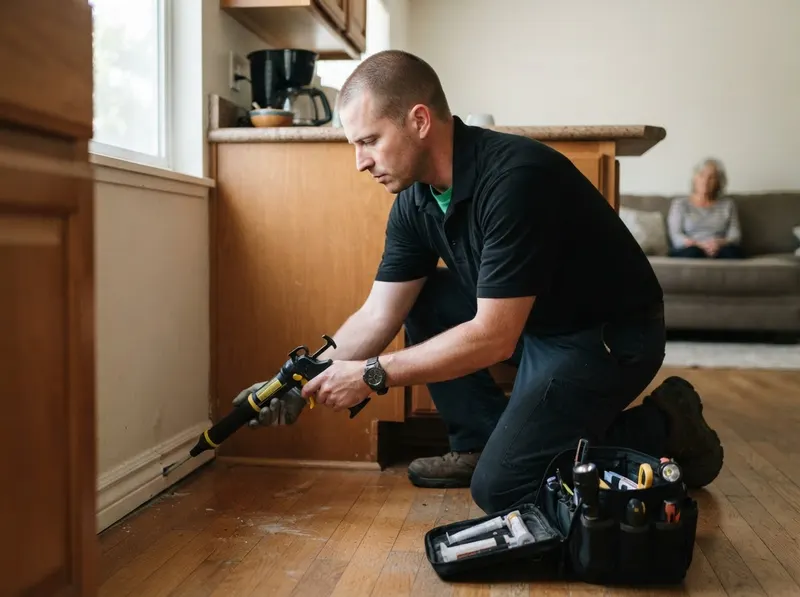
Argentine ants (Linepithema humile) and carpenter ants (Camponotus vicinus) present entirely distinct structural risks across Southern California, requiring distinct treatment strategies. Argentine ants construct multi-queen supercolonies across loose soil and foundation perimeters in neighborhoods like Silver Lake, Echo Park, and Koreatown. During summer heat spikes, worker lines enter slab cracks and copper pipe penetrations in search of moisture, often contaminating food preparation surfaces within hours. Carpenter ants, by contrast, do not consume wood but hollow out gallery networks inside damp Douglas fir structural members, roof valleys, and crawl spaces in oak-heavy canopies like Los Feliz and Encino. Applying generic over-the-counter pyrethroid perimeter sprays triggers a defensive reaction known as budding in Argentine ant colonies, causing a single reproductive unit to fracture into 3 to 5 independent satellite nests behind baseboards. Professional interior suppression relies on non-repellent transfer chemistry, allowing foraging ants to carry active bait matrixes back to the queens over a 72-hour feeding cycle.
Treatment selection depends on moisture exposure and the underlying building materials. Post-and-beam construction in Highland Park and 1920s Spanish revival lath-and-plaster homes in Boyle Heights frequently conceal hidden plumbing leaks that sustain carpenter ant nests. In these environments, targeted wall void injections of dry flowable borate dust penetrate nesting galleries directly, halting structural excavation without lingering odor. For slab-on-grade homes in Venice or hillside residences in Brentwood and Sherman Oaks, micro-gel bait placements are deposited inside electrical switch plates, beneath appliance kickplates, and along plumbing chases. The operational trade-off centers on patience: non-repellent transfer takes between 5 and 14 days to fully extinguish multi-queen nests, whereas contact sprays kill immediate surface foragers in minutes but leave the reproductive colony intact to repopulate weeks later.
Suppression sequencing follows three sequential operational steps. First, technicians measure interior relative humidity along perimeter framing with pinless moisture meters and acoustic sensors to locate hidden nesting galleries behind drywall. Second, targeted micro-droplet baits and non-repellent formulations are placed along established foraging trails, deliberately isolated from contact with children and domestic pets. Third, exterior entry thresholds, weep holes, and exterior foundation margins are treated to cut off secondary trail reinforcement from the yard. Structural modifications, such as clearing coastal honeydew-producing aphids or drying wet framing near sub-slab plumbing lines, ensure lasting protection against recurring invasions.
Every job gets a firm, written price after a free on-site visit.
Tell us about your interior argentine ant and carpenter ant suppression job in Los Angeles and we'll send a clear, written quote, usually the same day.
 PestGuardian Plus