Pest Control Service in Los Angeles requires precise architectural intervention to halt active infestations in coastal bungalows, hillside stilt homes, and historic masonry complexes. Locating a verified pest control service near me provides immediate domestic relief when rodents, termites, or insects compromise living spaces and sanitation.

Pest Control Service in Los Angeles is a targeted environmental management discipline that identifies structural nesting sites, eliminates active biological vectors, and seals property envelopes across regional architectural styles without introducing toxic hazards into domestic living areas.
Every service reflects the same meticulous attention to detail, whether it's a single job or a larger pest control service project across Los Angeles.
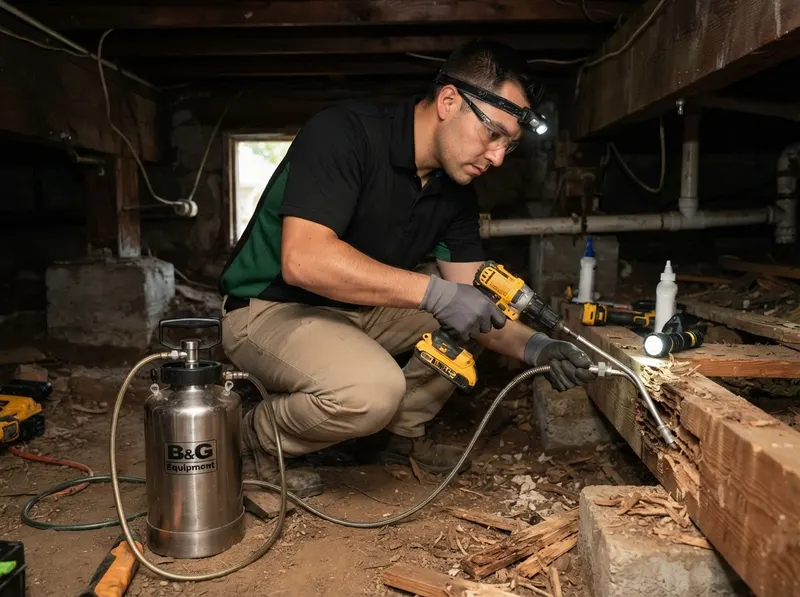
Remediation of wood-destroying organisms utilizing targeted structural borate applications, optical wall-void micro-injections, and containment tenting verified by certified structural pest field representatives. Protocols eliminate active colonies across exposed Douglas fir framing, subfloor joists, and attic trusses without leaving persistent petroleum residues. For localized drywood infestations discovered during structural alterations or real estate inspections, technicians drill precision 3/16-inch pilot portals directly into gallery channels to deliver pressurized disodium octaborate tetrahydrate, creating an impenetrable interior chemical boundary that halts timber consumption. Subterranean termite interventions deploy localized non-repellent liquid soil barriers containing fipronil along structural foundation perimeter stem walls, intercepting underground foraging worker paths before insects compromise mudsills or wall plates. Whole-structure fumigation utilizing sulfuryl fluoride gas is reserved for diffuse, inaccessible infestations across complex multi-pitch roof frameworks, completely eradicating active colonies within 72 hours under municipal permit compliance.
Get a quote →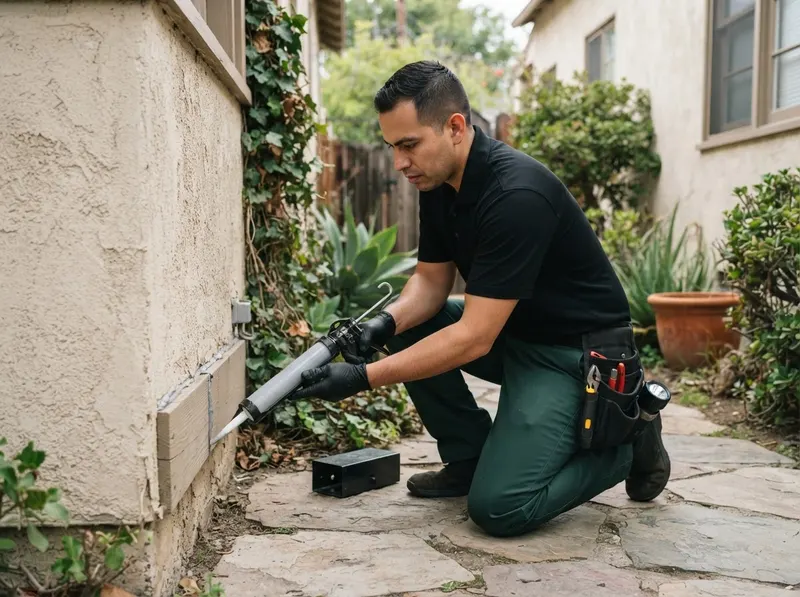
Complete extraction of roof rats (Rattus rattus) and Norway rats (Rattus norvegicus) from attic spaces, crawlspaces, and drop ceilings. Procedures incorporate high-density steel mesh patching over crawlspace vent screens, copper mesh sealing around utility conduit line entries, and snap-trap capture sequences that avoid toxic rodenticides inside living envelopes. Technicians map vertical travel routes across exterior stucco ledges, adjacent tree limbs, and service drop wires before anchoring mechanical traps along interior runway lines. Trap servicing is conducted at tight intervals to remove captures quickly and monitor catch rates until population zero is verified. Critical entry channels, including gaps exceeding one-quarter inch at foundation sill plates, sub-stucco weep screeds, and roof plumbing vent pipes, receive reinforced physical closures with heavy 16-gauge galvanized steel mesh bonded with non-sag hydraulic elastomeric compounds to permanently exclude future rodent generations from domestic areas.
Get a quote →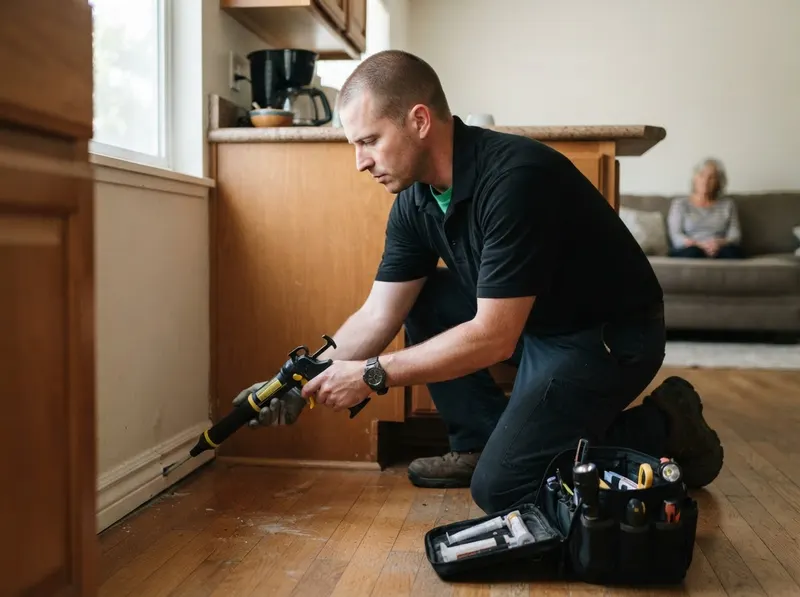
Colony-level eradication targeting micro-colonies located inside masonry foundations and exterior landscaping margins. Technicians employ slow-acting fipronil and indoxacarb gel baits that transfer active ingredients directly into sub-surface queens, arresting reproductive cycles without spraying airborne synthetic pyrethroids inside food preparation surfaces. Because southern California urban zones sit above massive subterranean Argentine ant supercolonies, standard aerosol repellent sprays simply split existing colonies through budding, exacerbating interior invasion vectors. Field technicians map exterior perimeter moisture zones, irrigation manifolds, and sub-slab conduits to place targeted macro-bait stations that deliver systemic toxicants back to hidden subterranean nest chambers. Inside kitchen and bathroom areas, micro-droplets of non-staining matrix baits are injected into concealed baseboard voids, pipe penetrations, and wall plates, maintaining domestic safety while utilizing natural worker foraging behavior to collapse nest populations at their biological source.
Get a quote →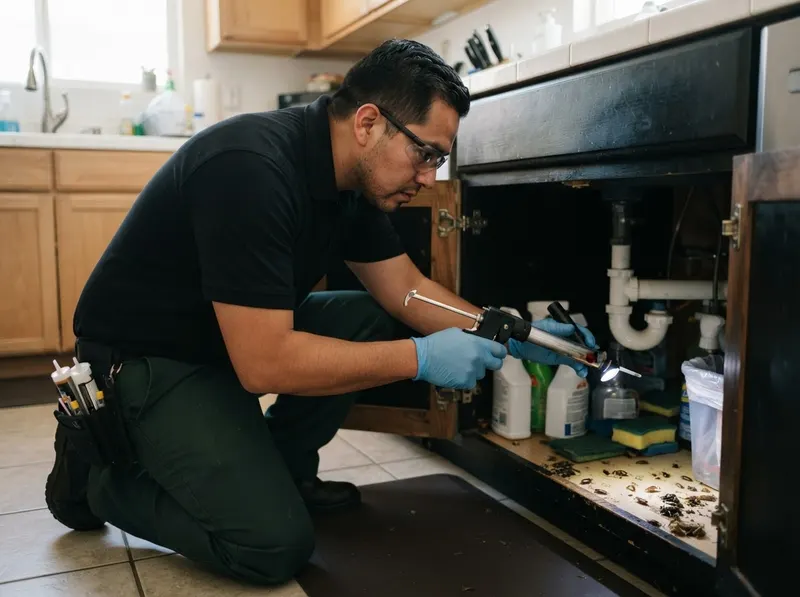
Systematic mechanical flushing and non-repellent insect growth regulator (IGR) treatments designed specifically for multi-unit apartment complexes and moisture-compromised kitchen cabinetry. Interventions disrupt nymph molting cycles and target harborages behind commercial-grade ranges, wall voids, and sub-sink plumbing channels. German cockroaches reproduce rapidly, with a single egg case producing up to 48 nymphs, demanding an aggressive, multi-tiered eradication strategy. Technicians utilize HEPA-filtered vacuum extraction to physically clear active aggregation clusters from appliance compressors and cabinet hinges, immediately dropping adult populations. Precision applications of amorphous silica gel dust into electrical gang boxes and dead wall cavities provide long-term, non-chemical desiccant barriers. Follow-up treatments every 14 to 21 days apply rotating active bait matrices to counteract behavioral bait aversion and neutralize newly emerged nymphs before reproductive maturation occurs.
Get a quote →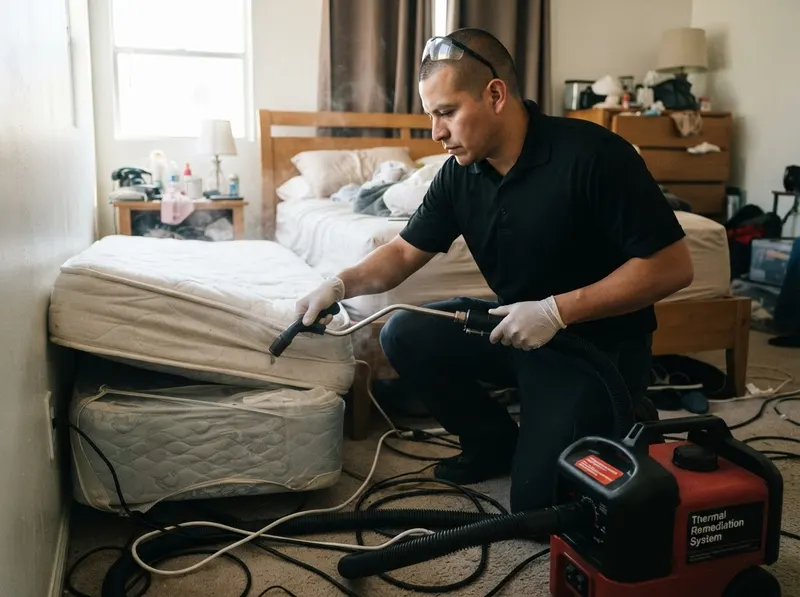
Targeted physical eradication of Cimex lectularius utilizing forced structural heat systems elevated to 122 degrees Fahrenheit or localized compressed CO2 cryonite spray. Protocols penetrate mattress seams, baseboard channels, and electrical junction boxes to destroy all life stages, including heat-resistant egg cases, in a single operational visit. High-output convective industrial heaters and axial air movers circulate dry thermal energy throughout the treatment envelope, raising core temperatures of heavy furniture, framed walls, and flooring assemblies past thermal death points for a minimum sustained dwell time of three hours. Precision remote wireless temperature sensors monitor hidden voids to ensure uniform heat saturation without damaging domestic electronics or structural finishes. For heat-sensitive specialty contents or localized boutique apartment settings, pressurized liquid CO2 cryonite rapidly freezes target harborage areas down to minus 110 degrees Fahrenheit, crystallizing cellular water in bed bug eggs and nymphs upon contact.
Get a quote →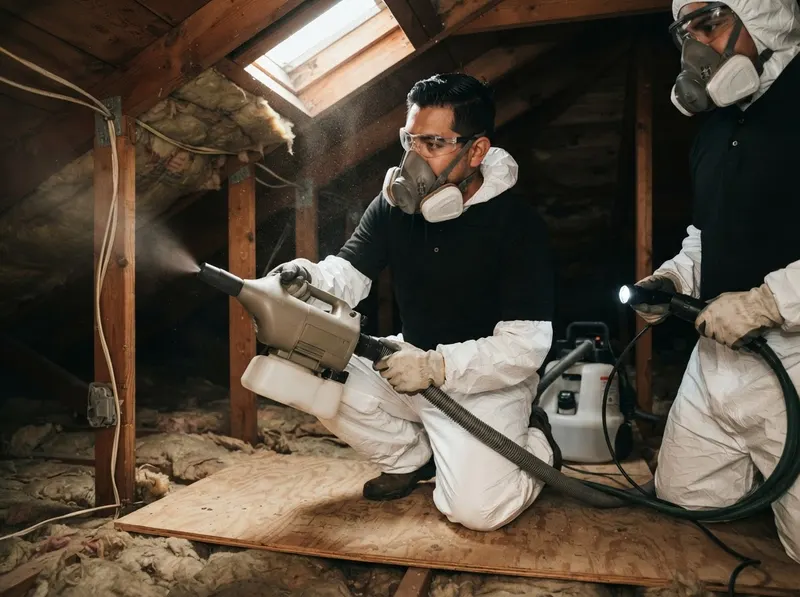
Restoration of structural insulation layers following chronic rodent or wildlife harborage. Technicians perform HEPA-filtered vacuum extraction of biological waste, remove urine-soaked fiberglass batts, mist wood framing with botanical enzyme disinfectants, and install fresh pest-resistant blown-in cellulose insulation treated with natural borate salts. Rodent urine deposits and pheromone trails embedded in soiled insulation attract subsequent waves of invading pests while generating airborne particulate hazards within domestic living spaces. Decontamination crews operate negative-air containment scrubbers while bagging contaminated attic materials for safe disposal outside the home. Structural timber framing, rafter plates, and ceiling joists are misted with hospital-grade broad-spectrum biocides that break down organic odor compounds and neutralize fungal or bacterial pathogens. The attic envelope is then retrofitted with high-density Class-A fire-rated borate cellulose insulation that repels insects and deters nesting.
Get a quote →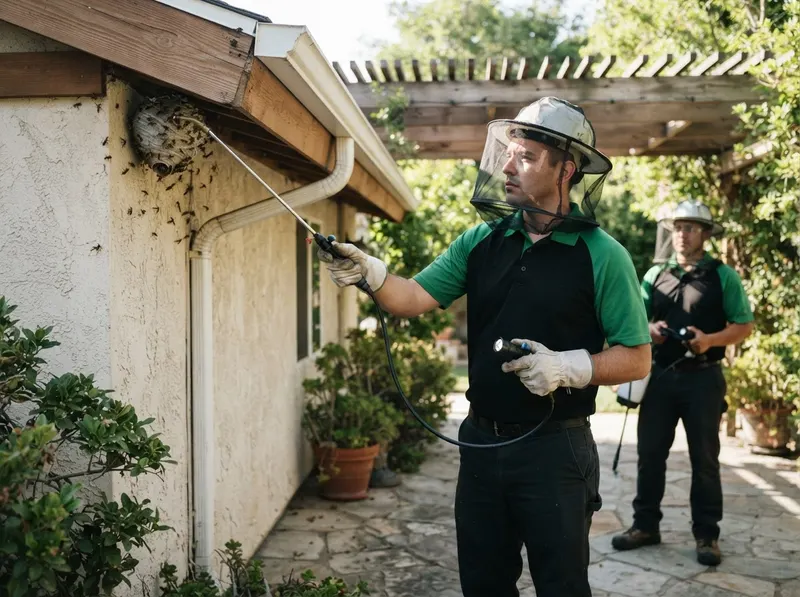
Direct mechanical removal and targeted localized treatments for paper wasps, yellow jackets, and bald-faced hornets nesting along exterior architectural eaves, rafter tails, and stucco parapets. Treatment stabilizes outdoor recreation zones without contaminating localized garden vegetation or perimeter drainage systems. Aerial nests constructed beneath exposed structural beams, tile roof edge cavities, and decorative window lintels are extracted during low-activity early morning periods to maximize capture of returning foraging workers. Specialized aerosol freeze formulations or localized dry pyrethrum dusts are applied directly into hidden subterranean yellow jacket nests or wall void entries, neutralizing aggressive guard insects immediately. Technicians treat bare wood rafter surfaces with long-lasting botanical repellents containing rosemary and thyme oils to deter queen wasps from founding new aerial paper combs in subsequent seasonal cycles.
Get a quote →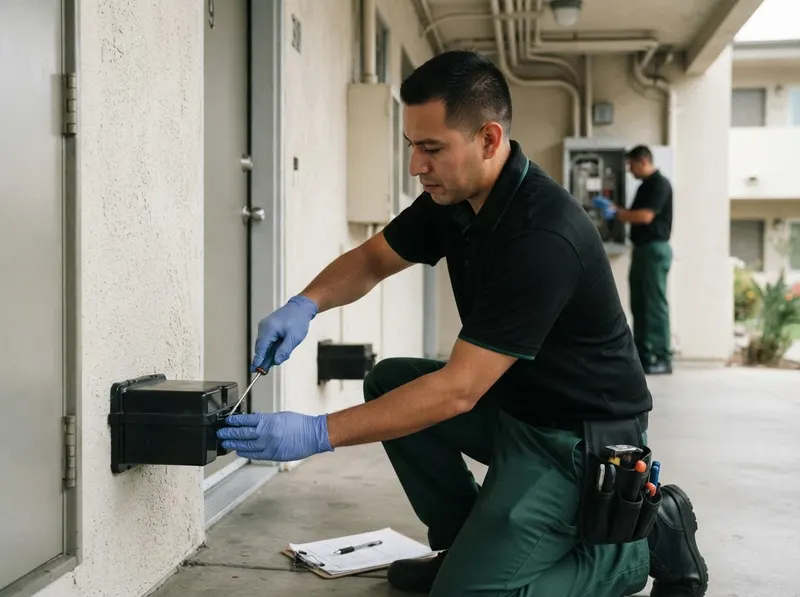
Scheduled diagnostic auditing and perimeter defense programs formulated for apartment communities, historic courtyard complexes, and commercial retail facilities. Focuses on preventative dump-station sanitation, foundation crack sealing, and detailed municipal health code documentation. Technicians establish exterior rodent tamper-resistant stations along trash enclosures, loading docks, and exterior parking perimeters, maintaining precise digital service logs for local health department compliance. Interior preventative sweeps focus on communal laundry facilities, boiler rooms, trash chutes, and tenant utility corridors where moisture and waste accumulation trigger cockroach and fly development. Facility operators receive structured physical audit reports identifying structural defects, tenant sanitation concerns, and mechanical exclusion requirements, creating an auditable management shield that prevents costly municipal fines and protects multi-tenant asset value.
Get a quote →You get a firm, itemized quote for your pest control service before any work begins, no surprises, no pressure.
Careful prep, tidy work, and a full cleanup when we are done. We treat your home and belongings like our own.
The same trusted, background-checked team from the first call to the final check.
If you observe active subterranean insect damage or drywood termite pellets falling from structural rafters, choose localized thermal or targeted spot borate treatment for accessible areas, or structural whole-structure fumigation for deep interior galleries; localized spot treatment preserves uninterrupted residential occupancy while whole-structure tenting requires a mandatory 72-hour vacating period and gas shutoff coordination. If you identify nighttime wall scratching or rodent droppings beneath kitchen plumbing, choose integrated mechanical trapping paired with complete architectural exclusion rather than broadcast chemical baiting; mechanical exclusion permanently blocks quarter-inch structural penetrations and prevents carcasses from decomposing inside wall cavities, whereas exterior chemical bait boxes require continuous ongoing servicing contracts and risk secondary poisoning to domestic raptors and indoor animals. If you notice seasonal ant trailing emerging through baseboards or shower tiles during extreme heat spikes, choose targeted interior gel baiting combined with an exterior low-toxicity liquid barrier; gel micro-injections exploit social insect grooming dynamics to eliminate the underground queen, while barrier-only treatments simply redirect foraging paths toward alternative household entry voids.
If German cockroaches infest kitchen cabinetry or shared multi-unit utility risers, choose systematic baiting using rotation chemistry combined with insect growth regulators rather than synthetic aerosol foggers; aerosol foggers trigger deep harbor dispersal into adjacent dry wall cavities and bedroom closets, whereas non-repellent micro-baits allow roaches to carry mortality back into structural nest nodes. If bed bugs enter mattress seams, baseboards, or upholstered furniture, choose whole-room convective thermal remediation elevated above 122 degrees Fahrenheit over surface chemical applications; convective heat penetrates electrical switch plates, hollow wall voids, and deep bedding seams to achieve complete 100 percent mortality of all egg, nymph, and adult populations in a single operational operational period, while chemical treatments frequently require repeated intrusive visits over multiple months. If brown widow or western black widow spiders cluster around foundation vents, sub-stair recesses, and perimeter patio furniture, choose direct mechanical web de-nesting accompanied by targeted botanical perimeter void dusting over broadcast lawn pyrethroid sprays; targeted structural void sealing eliminates the dark, dry voids where arachnids wait for nocturnal prey, while broad landscape spraying indiscriminately destroys beneficial garden predatory insects without reaching the deep recesses where mature egg sacs remain suspended.
Every project gets a firm, written price after a free on-site visit. Ranges below for orientation.
Tell us about your pest control service job and we'll send a clear, written quote, usually the same day. Or just call and talk to a real Los Angeles pro.
(424) 573-8526
Properties bordering the continuous natural terrain of Griffith Park, Elysian Park, and Kenneth Hahn State Recreation Area experience intensive biological pressure from native roof rats and ground-nesting Argentine ant supercolonies moving outward into residential perimeters. Subterranean moisture channels across low-lying Venice flats and historical drainage basins surrounding the La Brea Tar Pits sustain localized subterranean termite and German cockroach populations year-round. Older architectural envelopes, including pre-war Craftsman homes in Highland Park and post-war hillside post-and-beam structures in Sherman Oaks and Encino, present specialized entry channels along pier-and-beam crawlspaces and unbacked stucco weep screeds that demand custom 16-gauge steel mesh barrier installation. Hillside foundation configurations along the Santa Monica Mountains feature stepped concrete pads, exposed subfloor wood pilings, and dense perimeter landscaping that provide direct aerial pathways for roof rats traveling along utility lines and mature eucalyptus canopies. In densely populated urban corridors like Koreatown and Echo Park, shared multi-family utility vaults and vintage brick construction facilitate the rapid transfer of German cockroaches and bed bugs between adjacent structural walls. Coastal atmospheric marine layers along Venice and Brentwood maintain localized exterior humidity that accelerates the decay of unprotected exterior fascia boards, creating prime colonizing conditions for drywood termite alates during late-summer Santa Ana wind patterns. Effective pest exclusion across Los Angeles County requires diagnostic protocols calibrated to these varied microclimates, geological elevation variations, and regional architectural construction methods.
Free estimates for Los Angeles & the surrounding area.
 PestGuardian Plus