Bed bug thermal and cryogenic remediation resolves insect infestations without relying on persistent synthetic chemical residues inside sleeping quarters. In Los Angeles multi-family complexes throughout Koreatown and…
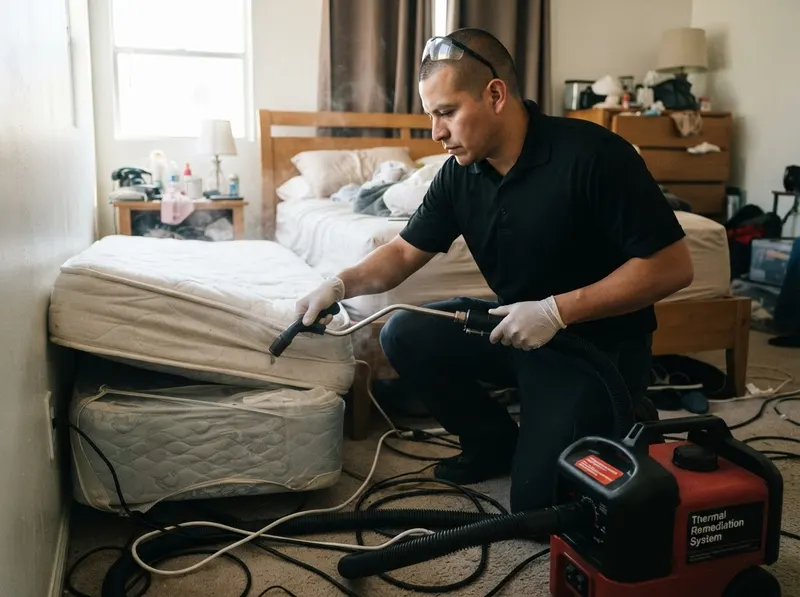
Bed bug thermal and cryogenic remediation resolves insect infestations without relying on persistent synthetic chemical residues inside sleeping quarters. In Los Angeles multi-family complexes throughout Koreatown and Echo Park, shared plumbing chases and common drywall partitions allow bed bugs to disperse quickly if pushed by irritating aerosol sprays. Thermal remediation addresses this by deploying commercial electric heaters and high-velocity axial fans to elevate indoor air temperatures between 120°F and 135°F. This range denatures bed bug proteins and kills eggs within 90 minutes of continuous contact, penetrating deep into hollow headboards, mattress seams, and hardwood subflooring where standard topical applications fail to reach.
Cryogenic remediation utilizes pressurized liquid carbon dioxide to generate dry ice snow at -110°F. When applied directly via an insulated nozzle to harborages, the extreme thermal shock crystallizes insect cellular water, resulting in immediate mortality of nymphs and adults. In sensitive residential architecture, such as vintage craftsman homes in Los Feliz or hillside dwellings in Silver Lake, cryonite freezing protects heat-sensitive electronics, musical instruments, fine oil paintings, and delicate vintage woodwork. The functional trade-off between the two methods centers on scope: whole-room heat eradicates unspotted perimeter vectors across an entire 1,500-square-foot floor plan, whereas cryogenic spot remediation isolates localized infestations in single items without requiring residents to remove wax candles, aerosol cans, or cosmetics.
Implementation follows a strict procedural sequence to prevent structural damage while ensuring biological lethal thresholds are sustained throughout the dwelling. Step 1: Technicians conduct an architectural thermal-loss assessment, sealing window drafts and air vents in apartment units or single-family properties in Sherman Oaks and Brentwood. Step 2: High-output heaters are positioned alongside real-time wireless temperature sensors placed inside closet corners, under cushions, and beneath baseboards. Step 3: Heat is brought to targeted levels and maintained for 4 to 8 hours, while cryogenic operators treat sensitive electronics and delicate trims at sub-zero temperatures. Step 4: A secondary thermal scan verifies that every harborage void reached the verified lethal baseline before the space is ventilated and returned to ambient room temperature.
Every job gets a firm, written price after a free on-site visit.
Tell us about your bed bug thermal and cryogenic remediation job in Los Angeles and we'll send a clear, written quote, usually the same day.
 PestGuardian Plus